University Hospitals Bristol and Weston NHS Foundation Trust

Upgrading the energy infrastructure

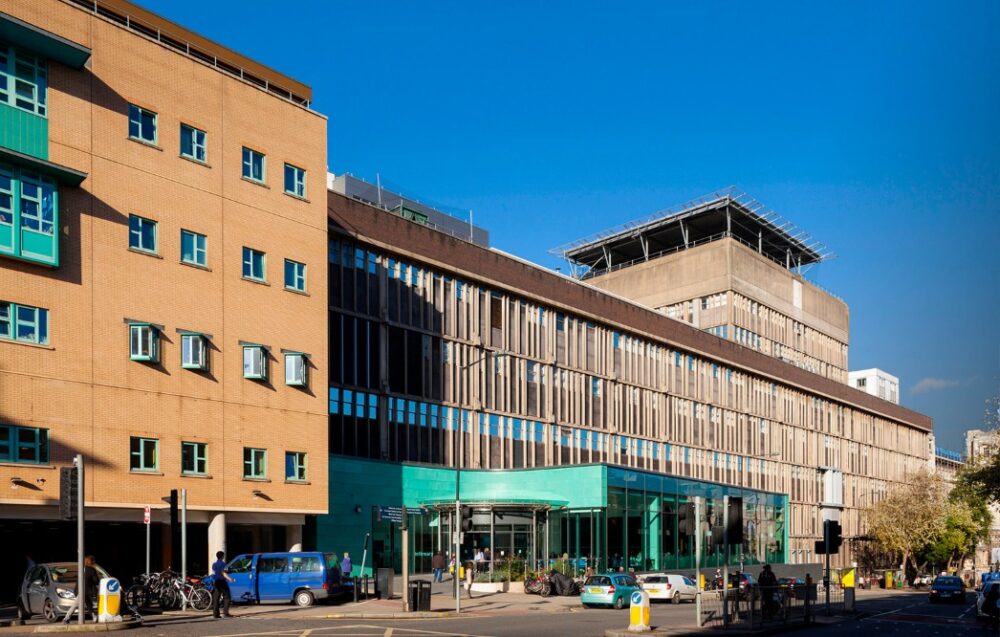
Bristol Royal Infirmary needed a complete refurbishment of their energy centre and distribution network. Find out how we delivered this for a busy, live hospital site

Executive summary

We were contracted to develop a complete refurbishment of the energy centre and distribution network. The solution was designed to meet the University Hospital Trust’s current needs, but to also future-proof it so that we can add additional capacity for increased future demand.

What we’ve achieved with this project

£250

cost per tonne of CO² saved

5.75km

of pipework installed

16MW

energy centre capacity

Project overview

University Hospitals Bristol and Weston NHS Foundation Trust (UHBW) have set an ambitious target to become carbon neutral by 2030.  As part of their work to achieve this they are revolutionising the way they generate heat and hot water.

The project saw us refurbish their energy centre, replacing the aging 1MWe CHP engine with a more modern and efficient 3.36MWe CHP engine and Combination Boiler. We also installed the district heating network which distributes the heating and hot water around the hospital’s campus.

Our solution

The energy scheme at Bristol Royal Infirmary saw us act as principal designer and contractor to create a “turnkey” design, build and commissioning solution.

Phase 1 of the project saw us replace the existing CHP engine with a new larger and more efficient engine in conjunction with a Combination Boiler. A heat network was installed to four satellite plantrooms, in which existing steam PHX’s were replaced with MTHW PHX’s and associated BEMS controls.

An additional standby diesel generator was installed to support the existing four generators and the generator controls system was upgraded to accommodate the additional engine.

To support the above works, an extensive electrical infrastructure upgrade was carried out including the provision of new High Voltage and electrical Switchgear, transformers and Sync Breaker. We worked closely with the trust throughout, ensuring electrical resilience for critical departments within the hospital.

Whilst the project was designed to meet the current needs of the hospital, we also future-proofed the system so that additional capacity can be added, and the network can be expanded. To do this we not only replaced old equipment with more modern technology, but we also improved the performance of existing equipment

Phase 2 will see the two remaining steam boilers replaced with MTHW boilers and the network extended to an additional ten satellite plantrooms, with a view to a complete de-steaming of the hospital. Future expansion has been included within the design and installation to provide connections should Bristol City Council wish to install a proposed district heating network of their own.

The existing CSSD is currently supported by steam and as such the sterilisers and washers will be replaced or modified to electric models, which again involves a significant electrical upgrade.

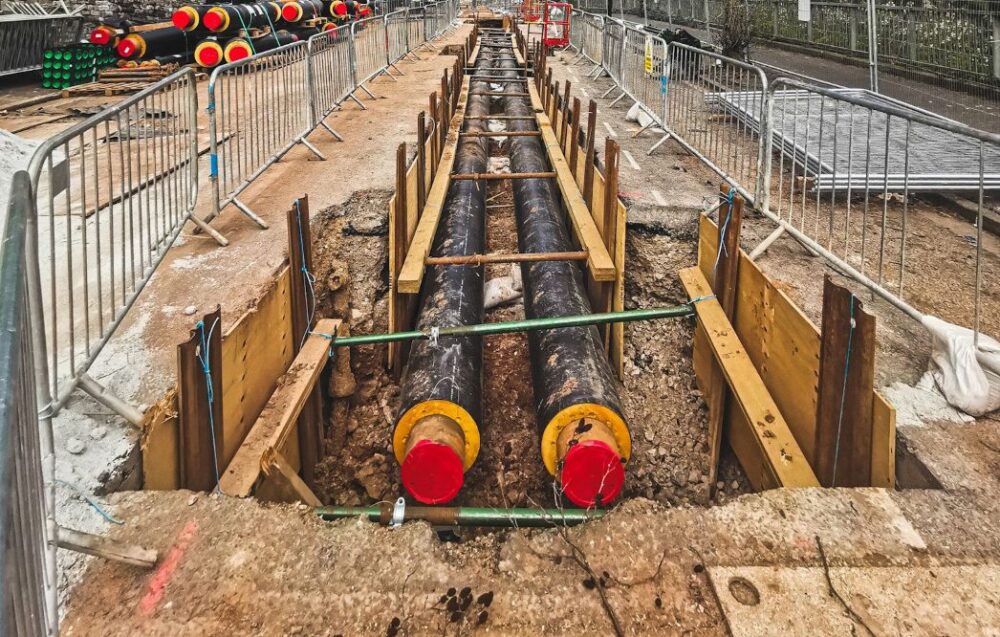
Bristol Royal Infirmary heat network pipe installation

Project details

Refurbishing the energy centre

We started with a full survey of the energy centre and existing plant. This involved performing a 360-degree digital scan of the energy centre to give us accurate measurements.

Our designers then created an optimised layout for both performance and operation and maintenance. We removed the aging 1MW CHP engine and replaced it with more modern 3.3MW units during phase one. In phase two we replaced the existing steam boilers with hot water boilers.

Additional improvements saw us add NOx abatement measures to 4 existing standby generators, add a new 2.25MVA diesel generator, new SCADA system and modifications to the HV/LV network.

All works were delivered in a live-hospital environment, in consultation with hospital staff and much of the project was delivered during the Covid pandemic.

Distributing heat throughout the campus

During phase one, we installed district heating pipework to distribute the MTHW around the campus. We primarily installed the network below ground. Overall, we installed 2.45km of steel, pre-insulated pipe which connected 4 buildings, each of which had one or multiple plate heat exchangers in the plant rooms.

Phase two will see us employ a mix of above and below ground pipework to avoid clashes with other services and negotiate existing buildings. This phase will see us install 3.3km of district heating and connect 10 buildings. Site wide distribution has been extensively surveyed and designed to ensure that the installation has minimal impact upon hospital operational activities, specifically Blue Light Routes, whilst being resilient and maintainable.

As phase two was planned and there was a desire from the client for the energy scheme to also meet future needs we sized all mains with this in mind. The energy centre will have 16MW capacity and the heat network can be expanded further around campus or towards a potential city-wide connection.
Converting from steam to MTHW

It is not uncommon for hospitals to convert from steam systems to medium temperature hot water (MTHW). This increases efficiency and simplifies the operation and maintenance requirements.

In phase 1 we swapped out the plant and pipework, and connected the waste heat combi-boiler which takes heat from the CHP to produce steam. In phase two we will convert this, so it produces medium temperature hot water.

The transformation was made slightly more complicated as the hospital still had a steam requirement for its clinical sterilisation, but our designers were able to create a modern, electrical solution which met this need.

Delivering savings and meeting deadlines through prefabrication

Overall, we will be installing 50 plate heat exchange skids across 14 plantrooms. These skids range from 1.128MW to 500MW and we were able to deliver better value, have more control over delivery and quality and, importantly for this project, reduce programme time.

As the project has been part funded by the Public Sector Decarbonisation Scheme (PSDS) it was a requirement that we achieved heat on to each of the connected plant rooms by September. To achieve this, we manufactured the plate heat exchangers at our Blackburn prefabrication department.

This means that the skids come ready to install, dramatically reduce on-site hot works and we have full control over the production and delivery schedule.

Achieving carbon targets

We supported the Foundation Trust throughout the PSDS funding process with technical support and advice aimed at maximising carbon savings. To be eligible for PSDS funding we needed to demonstrate the scheme can achieve a maximum £500/tCO2. We were able to deliver a design which would achieve £250/tCO2 which resulted in the project being one of the first to be awarded a grant from Salix.

Similar case studies

Talk to us about your project

Contact Form